Monday, 26 August 2024

Northland Story Tour, August 2024

What an amazing week on Storylines Northland tour last week, travelling from Ōrewa via Dargaville, Kaikohe and many small places in between, all the way up past Kaitaia and finishing in Mangonui. 

Thanks to lovely fellow authors Angie Belcher, Swapna Haddow and Vasanti Unka for their wonderful company, to Anne Dickson for her skilful driving and in-depth knowledge of the schools of the far North and to Storylines for the opportunity to be a part of it and for their meticulous organising. 

We had such a lot of fun and hopefully made a difference to some of the over 3,000 students we met during the week.


  • Highlights

The feeling of being steeped in the history of the North

Driving through the Waipoua Kauri Forest and walking the track to see Tāne Mahuta

The Year 5 and 6 girls at Dargaville Primary School who all lined up for autographs after my session

A warm welcome at the smallest school I’ve ever visited, Kaihu Valley School

The Year 9 and 10 girls who gave me hugs after my session at Northland College

The Year 5 and 6 girls who gave us a tour of their lovely school in Kawakawa

Walking on the beach at Ahipara

Doing one session in a church at Pompallier Catholic School!

Our furthest north school, Waihārara, and the Years 0-2 who put up their hands at question time and said Thank you for coming to our school and I love your books

Seeing signs for Cape Reinga and 90 mile beach

Icecream at the Cable Bay store

Sunrise over the water at Mangonui and beautiful whale poems and art on the walls of one classroom at Mangonui School

  • Best highlight of all

All the students who sang us a waiata after our session, so special, such beautiful voices!

  • Favourite comment

I’ve never met an author before! (Riley from Ohaikau College, looking star-struck)

  • Favourite questions

Which was the hardest book to write?

Is it worth being a writer? (what a thoughtful  question that really made me think about how we measure what things are “worth”)

Have you kept a diary?

What are good things about being a writer?

How long have you (me and Swapna) known each other?

What do you love about writing?

How do you choose a title?

Will you come back tomorrow? because I’ve got a book to show you!


Sunday, 25 August 2024

 New Zealand Migration (Oratia Books, 2023) 


I loved learning so many fascinating and inspiring stories of migration for this book.


 Iris and me (Ahoy! Cuba Press, 2023) 


Runner-up, NZSA Laura Solomon Cuba Press Prize 2022
Winner, Young Adult Fiction Award, NZ Book Awards for Children and Young Adults 2023
Longlisted for the ARA Historical Novel Prize 2023
Storylines list of notable books for 2023
Aotearoa books of the year for 2023 (The Spinoff)
Best children’s and YA books books for 2023 (National Library)
Best of the year: Aotearoa’s YA class of 2023 (Kete)
Highlights of 2023 (Wellington City Libraries)
Shortlisted for the NZ Booklovers Awards 2024
Ten top junior, middle grade and YA books by NZ authors over past ten years (Kete)
IBBY Honour List 2024 (IBBY: International Board on Books for Young People)

Monday, 4 April 2022

The Water Bottle

The Water Bottle is the story of three children: Tom, Airini and Derya. They come from different backgrounds, but maybe their families are connected in ways they don’t yet know.


This has been a lovely book to work on. There are a number of Anzac Day-themed picture books, but I think this one is unique for its pairing of a NZ writer and Turkish illustrator. I loved working with Oratia and seeing how the project developed, from our initial discussion to the finished book.  

Picture book writers and illustrators often work quite separately, but because Burak Akbay was in Turkey, we sent him suggestions for some NZ scenes, like what a typical war memorial or classroom might look like. But of course he was very familiar with the Turkish scenes, and it was fascinating to see his interpretation of them, and to watch the illustrations developing as he created them. 

You can read more about the book (and my own trip to Gallipoli) here on my website. 


Quarantine

Today polio is an almost forgotten disease, but a hundred years ago, polio epidemics regularly swept the world. This is the story of the 1936/37 polio epidemic in New Zealand.


Quarantine was first published by Scholastic as Enemy at the Gate, but it's now been republished and brought under the My New Zealand Story banner.

I love the fabulous new cover, and I'm so pleased that this book will now reach a new generation of readers for whom epidemics are now part of their lives, not just a story from history. 

Thanks to Bobs Books Blog for this thoughtful review

Tuesday, 15 June 2021

Why do creative rights matter?

Sharing the stories behind my books Enemy at the Gate and The Great Chocolate Cake Bake Off here with @CreativeReadsNZ. 

As their website says, creative rights are Good for our economy, Good for our culture, Good for our social wellbeing and Good for all of us.


#KeepthePagesTurning
#CreativeRightsNZ @CreativeReadsNZ


Friday, 11 June 2021

2021 New Zealand Book Awards for Children and Young Adults

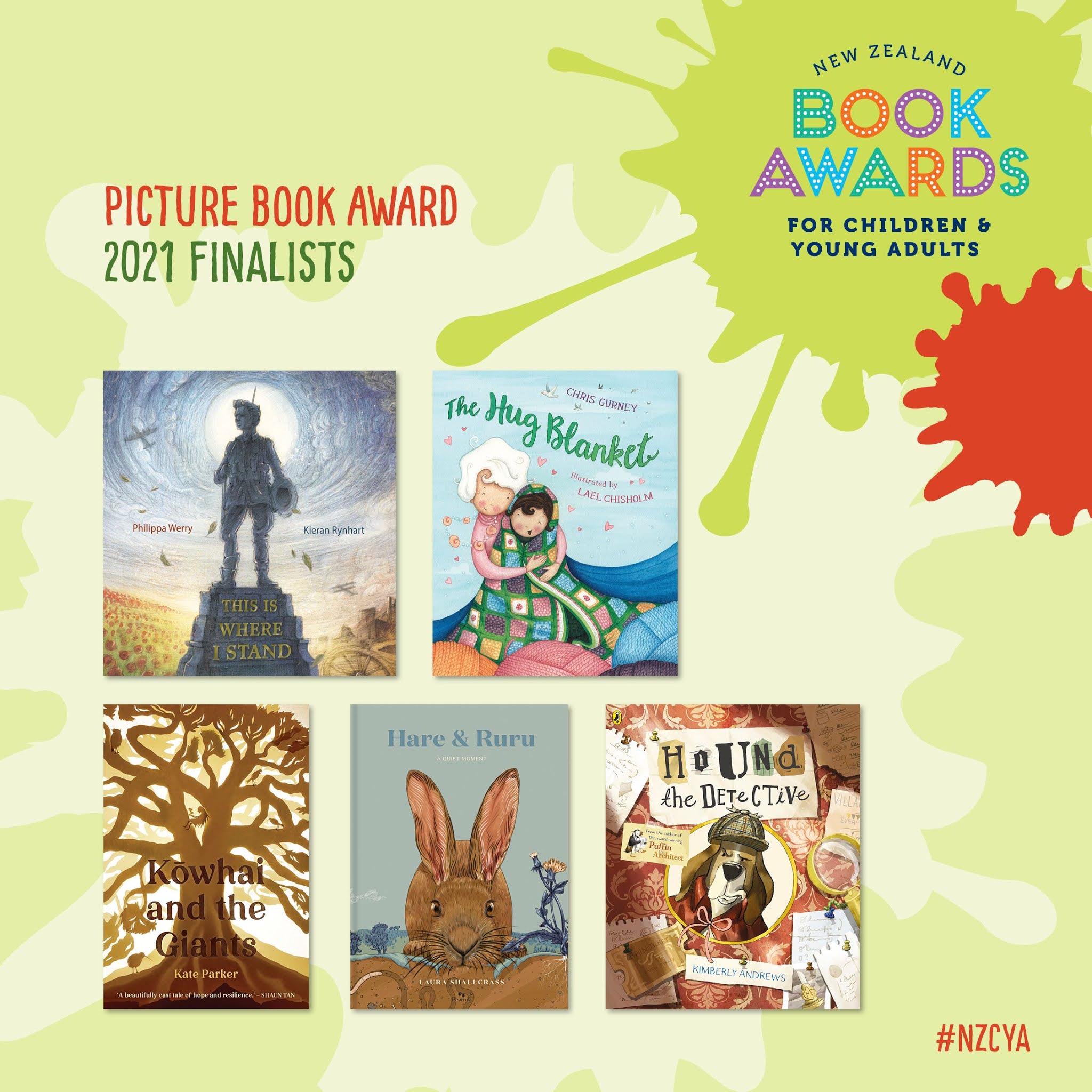
I'm very happy and excited to be shortlisted in the Picture book section of these awards with This is Where I Stand, beautifully illustrated by Kieran Rynhart and published by Scholastic. It's a privilege to be included amongst these five lovely titles - and I know there were many other amazing picture books that came out last year as well, so  big congrats to all those writers and illustrators, shortlisted or not.  


Saturday, 24 April 2021

Anzac Day 2021

 Seven years after marking Anzac Day at Gallipoli with the wonderful group of Gallipoli Volunteers (and some thousands of others), it felt very special today to be at another Anzac Day service beside the sea, as the local community gathered on a still and sunny morning at Paekākāriki.

Poppy tree in the village

Another special thing about this service was that nearly everyone who spoke or carried out an official function was a woman: MC Janet Holborow, the woman who called the karanga, the representative from the Turkish Embassy, the minister who gave the Prayer of Remembrance and the benediction, Alex Haddow who sang (beautifully) the NZ National Anthem and Po Atarau - Now is the Hour, Sunny Amey who read (beautifully) Binyon's Ode of Remembrance, Paranahia Broughton who read the Roll of Honour and Lieutenant Jaiselmer Keivom-Lockhart who gave the Memorial Address.   

"What last year taught us was that there are many ways in which we can serve our country" - Lieutenant Jaiselmer Keivom-Lockhart.

Yet another special feature was that for the first name, the names were read out of the ten US marines who died in a training exercise off Paekākāriki beach on 20 June 1943. Before her reading, Sunny Amey shared her memories of being at secondary school during WW2 and having US servicemen come to their home for lunch every Sunday. 

Getting ready for the Paekākāriki Anzac Commemoration 2021 


Across the road from the Paekākāriki Memorial Hall, the surf was up and the surfers were marking the day in their own way - you can just spot a couple of them in the bottom photo. 


Tuesday, 10 November 2020

Wellington Writers Walk

 This year the Wellington Writers Walk committee decided to hold a walking tour as part of Wellington Heritage Week. Actually two tours - one on Thursday afternoon and one on Saturday morning. 

Thanks to Stefanie McKenna for these wonderful photos of the Thursday walk. (The Saturday one was equally fun, but with worse weather!)

We covered about 7 or 8 of the 23 plaques, between Te Papa and Frank Kitts park, starting with Iris Wilkinson/Robin Hyde and ending with Denis Glover. (Except on Saturday, when the rain finally defeated us before we reached Denis' plaque.)  

Thanks also to Constance Talbot for great organising skills, and Maggie Rainey-Smith for excellent co-hosting!


Wednesday, 16 September 2020

Trees and the ocean

Last week I was in the South Island doing a series of school visits, thanks to Read NZ Te Pou Muramura and the Writers in Schools programme. 

At Kaikorai Valley College in Dunedin, I did a couple of writing workshops and we talked about using our imaginations to try and look at things in a different way. 

Here are four of the wonderful poems that the students wrote as a result - I love the amazing ideas they have come up with. 


The Ocean

The ocean is a soft Blue sheet, changing

in the wind and devouring land.

It is a complete different

world, creating a home for fish, sand

and crabs. It’s a shark haven

and a popular place for plastic.

An Ombre is what

the ocean is, made from

 millions of blues.

 It can be as beautiful as a peacock

or as ugly as a dump

(Grace, Year 7)


Ocean

The ocean is like a ferocious lion swallowing up its prey,

or a motel for the swimming fish that never get a say,

or a calm blue sheet so inviting and kind,

but the further you go, the more likely you'll find

the home to the sharks, ready to pounce, 

their razor sharp teeth will bite even an ounce, 

the ocean is home to crabs and fish, 

but along with them what is not delish, 

a buffet of plastic ready to take

the life of an innocent sea critter,

Poor creature, too late.

The ocean is a war that cannot be won.

(Jordan, Year 7)


Pine Tree

Standing tall in the mountains,

A spike pointing towards the sky,

Green as grass on a summer’s morning.

In winter decorated with tinsel and lights

As bright as the sun.

Pine needles litter the ground

Like a soft blanket to walk on

(Cody, Year 10)


Earth’s life-line

A pine tree is a spear pointing to space.

The smell reminds us of the outdoors.

A pine tree is Earth’s lungs,

The swooshing sound keeps up at night.

Green covering of the hills,

Place which is called home for many animals.

The playground for many children.

The colour of classroom paint,

Rocket which is unable to take off,

The structure for a bird’s home.

 (Josh, Year 10)

Sunday, 6 September 2020

Wife after Wife by Olivia Hayfield (Little, Brown, 2020)

Wife after Wife is the dazzling debut of Olivia Hayfield, and simultaneously the first adult novel by Auckland writer Sue Copsey, who launched her pen-name alter ego after winning a Pitch Perfect competition run by the New Zealand Society of Authors at their AGM in 2018. The prize was consideration of a manuscript by High Spot Literary’s Vicki Marsdon and Nadine Rubin Nathan

I remember being there when the winner was announced, the congratulations that flowed from everyone in the room to Sue, and her utter astonishment. Over the next few months, this news was followed by even more excitement when High Spot Literary sold it to Little, Brown Book Group in the UK in a two-book publication deal. 

Wife after Wife is a retelling of the life of Henry VIII and his marital and other adventures, wittily interweaving Elizabethan intrigue with modern-day romance. Beginning in the pre-internet 1980s, it brings us almost right up to the present day, ending in the #MeToo era which clearly spells trouble for Henry. Part of the enjoyment is watching as the social history, music, celebrities and major events of each decade slide by, as well as changes in the media industry and in the skyline of the city of London.  

For prior knowledge, I relied on the Tudors and Stuarts from 7th form history, back in the days before we studied any NZ history, as well as tourist-y visits to various UK castles and museums. But even if all you know about Henry VIII is that he had six wives, that’s more than enough to enjoy this book, especially as the fates of the six are neatly summarised on the front and back covers (Divorced, murdered, died… Divorced, departed, survived). 

Henry VIII becomes Harry Rose, rich and powerful heir to a media empire. We know he is “wickedly good-looking” because of the effect his good looks have on almost everyone he meets. He’s charismatic, good company, full of “exuberant self-confidence”. He’s also impulsive, selfish, and gradually more and more haunted by his conscience.    

Each of the six wives is similarly translated into modern times with minor adjustments to their names (like Ana for Anne, or Janette for Jane) and a few tweaks to timelines. Almost every minor character also has an Elizabethan equivalent, one of the most unexpected but cleverest being Sir Thomas More’s modern day Terri ‘Baskin’ Robbins-More, editor of one of Rose Corp’s top magazines, whose nickname is due to her instinct for a good scoop.      

But Wife after Wife is more than a smart retelling of history (with a snappy title). It’s spicy and deliciously sexy while managing to avoid the embarrassing pitfalls of “naming of parts” and “what goes where”. It’s very funny, and you get the feeling that the author herself had enormous fun bringing Henry and his wives and children into today’s world, as well as taking them on the annual rounds of the English social calendar. 

Everyone will have their favourite wife, and themes of female friendship, motherhood, pregnancy and loss are sympathetically handled, but the book also manages to tell Henry Rose’s story from a position of empathy and understanding, without whitewashing his flaws, which considering his many infidelities is an accomplishment in itself. 

I’m now even more excited that this was a two-book deal and looking forward to the sequel, focusing on Harry’s children: Sister to Sister.   

Like many recent book releases, this one has been impacted by covid19. But bookshops are open again now, so get to your local indie bookseller and ask for Wife after Wife!


Tuesday, 25 August 2020

Jerningham by Cristina Sanders (Cuba Press, 2020)

The Wakefields haven’t gone down well in history, more notorious for scandals like Edward Gibbon Wakefield’s abduction of a 15-year-old heiress than celebrated for any of their achievements. Despite the evidence of Point Jerningham, I hadn’t even heard of Edward Jerningham Wakefield (apparently the Wakefield males of Edward’s line all shared the same first name) so I wasn’t sure what to expect from this book. Drawn in by the striking cover by Rakai Karaitiana, what I found was a colourful and detailed picture of 1840s Wellington.

When we read and think about the 1840s, our attention is often drawn to the north: the signing of Te Tiriti at Waitangi, the rowdy town of Kororāreka, the fledgling settlement of Auckland.  In Jerningham, Sanders presents us with the shiploads of bewildered new settlers who had left behind everything they knew and sailed across the world, fooled by the rhetoric of the New Zealand Company’s advertisements into believing that their land purchases were legal, and expecting a more established community than the cluster of tents and ramshackle buildings on the windswept beach of Pito-one.   

Some of the characters in this book are real: Colonel William Wakefield, Captain Arthur Wakefield, Charles Heaphy, Ernst Dieffenbach, Te Puni, Te Rauparaha, Te Rangihaeata – and, of course, Jerningham himself. Others, including the narrator, Arthur Lugg, are not.

Edward Jerningham Wakefield from the frontispiece of his book Adventure in New Zealand, Christchurch, Whitcombe & Tombs, 1908 (First published in 1845). Artist unknown.

Arthur Lugg arrives on the Aurora, one of the first settler ships. He is a bookkeeper, the son of a clergyman, and only recently rich, thanks to an inheritance received by his wife who died soon afterwards. There is no hint of foul play here – Arthur Lugg is a completely upright Victorian chap, conservative, a little clumsy but generally well-liked, intensely loyal to the Queen and the Crown, and a hard worker who terms himself the “invisible man” as he slogs away on paperwork for the burgeoning Wakefield settlements. Nevertheless, despite or perhaps because of the difference in their temperaments, he falls under the spell of the wild and mercurial Jerningham. He also falls in love on the journey out with a young woman called Ada Malloy, but due to various machinations – not of his making – ends up married instead to the quiet and beautiful Dorothy, oblivious to the rumours that swirl around her.

With Jerningham, Arthur Lugg travels to Kāpiti, Wanganui (as it was then) and up the Wanganui River to the central North Island, as yet hardly glimpsed by Europeans. After a personal crisis, his travels also take him to Nelson in time to be embroiled in a crucial point in the history of that new settlement and of Māori-Pākeha relations.   

Wellingtonians (especially) will be fascinated to trace the early days of today’s city as familiar streets are formed and buildings erected. Sanders treats her material with confidence, and her sailing experience on tall ships shows in her descriptions of weather and in the often frightening and totally believable scenes on board small and large boats. On land, earthquakes add to the general sense of unease. We see the growing tension and distrust between the New Zealand Company and Governor Hobson, the constant presence of the surveyors, the pressure on the Company to prepare for the hundreds of settlers they have already – with whatever motives and degree of truth - enticed to their unformed towns and the misunderstandings and illegal land dealings that will lead to the disaster of the Wairau Affray and later confrontations. 

Point Jerningham, at the far end of Oriental Bay, will now serve for me as a reminder of a young man who was deeply flawed but drew people to him – both Māori and Pākeha, according to this retelling – with his combination of brilliance, good humour, impulsiveness, exuberance and daring.   

Sanders writes intentionally through the lens of the 1840s and points out In her author’s note at the end of the book that “the attitudes to race, culture, gender and class.. are not designed to offend or provoke, but to illustrate the common perspective among 1840s colonials.” However Arthur Lugg, her narrator, comes across as perhaps more enlightened than some. He is curious about the Māori whom he meets in Wellington and on his travels with Jerningham, in awe of the magnificent physique of the men and the beauty of the women. He tries to learn te reo and tell us that his accent improves over time, and worries that the New Zealand Company’s land purchases are illegal. He even owes his life to Te Puni, who rescues him from drowning.

This is Cristina Sanders’ debut novel, released by Wellington publishers The Cuba Press and printed by Wakefield Printers, both of them – in a nice piece of synchronicity – located on Wakefield St. She is also the winner of the 2019 Storylines Tessa Duder award for an unpublished manuscript. That book will be published by Walker Books next year, and I’m sure there will be more.

To hear Cristina Sanders talking about Jerningham, the Wakefields and the messy, fraught, flawed and often ugly business of colonialism, listen to this interview on Radio NZ, recorded on the day of her book launch at Unity Books.

Roseneath, Oriental Bay, Point Jerningham (in foreground) and Point Halswell, Wellington New Zealand (russellstreet / CC BY-SA (https://creativecommons.org/licenses/by-sa/2.0)


Wednesday, 19 August 2020

Enemy at the Gate

This is the other children's novel (along with The Great Chocolate Cake Bake Off) that I've recently re-released under the Pipi Press imprint. 


A deadly disease is sweeping the world and nobody knows how to stop it. Twelve-year-old Tom Mitchell can't even see his best friend Charlie. He wonders when the lockdown is ever going to end. And then things get worse. It might all sound familiar, but this is New Zealand in 1937-38. The disease is infantile paralysis, or polio, and nobody knows where it will strike next. 

When Enemy at the Gate was first published, something strange and unexpected happened. As soon as it was in the shops - or actually sooner; the first time was a conversation I had with one of my children's teachers - people started coming up to me to share their own stories of polio. Almost everyone over a certain age - old enough to remember the 1950s or early 1960s - knew someone who had been affected by polio. Some had even had it themselves. 

Whenever I have taken this book into schools, I have said to the students: in the polio epidemics, schools were closed - do you think that would be fun? There are always a lot of enthusiastic yesses. Then I explain that as well as schools, movie theatres and swimming pools were closed, you couldn't visit your friends' houses - and you still had to do school work! 

This has always felt like describing history - now it's describing their own lives. 

I had already planned to release this title last year, but earlier this year under Level 4 lockdown, I had a number of requests from teachers asking where they could buy a copy. They were keen to use it as a "compare and contrast" text with their students, but I hope it's also seen as a good classroom read. 

Big thanks to my wonderful editor Sue Copsey (who also edited The Telegram) and to designer Cheryl Smith who produced this beautiful cover. I love its unsettling sense of yearning and uncertainty.

Thank also to the invaluable NZ children's lit website The Sapling for this review

You can find Enemy at the Gate in bookstores, including The Children's Bookshop in Kilbirnie, Wellington. 


Monday, 17 August 2020

The Great Chocolate Cake Bake Off

 I've just re-released two of my children's novels, and this is one of them. 

The Great Chocolate Cake Bake Off was first published some years ago and has been out of print for a while, but it's a book that people often tell me they loved reading. I've even had people contact me to say they loved it so much as a child, they want to know where to buy a copy now. (And now they can!)

Some of my favourite emails include: "I absolutely loved your book; The Great Chocolate Cake Bake-Off. It was the best story I’ve ever read" (from a 9-year-old boy) and "Chocolate Cake is still the best book out there!!!" (from an 11-year old boy). 

Big thanks to my wonderful editor Sue Copsey (who also edited The Telegram) and to designer Cheryl Smith who came up with this gorgeous and delectable cover. 

You can find it in bookstores including The Children's Bookshop in Kilbirnie, Wellington.   


Thursday, 2 July 2020

Our Incredible Dogs


So here’s my new book! It was meant to be on the shelves a few months ago, but Covid-19 delays with printing and shipping mean it's only just arrived. 

It’s quite different from my last few nonfiction titles and I still haven’t come up with a short and pithy way to describe it. Maybe a mixture of NZ history, art – and animals? 


The idea for it has been sitting at the back of my mind for years, ever since I wrote a piece on Paddy the Wanderer for the School Journal (a plaque about him sits above a drinking fountain for people -  and dogs! opposite the Museum of Wellington)  - 


-  and the idea came back when I was searching for my Antarctic book and found sled dog Hector in Lyttleton. 


And like any Wellingtonian, I often pass this statue at the bottom of Plimmer steps. 


Gradually I started to realise how many dog statues and sculptures there are in NZ – more than of any other creature, and I started to wonder why and where they all are. These are the ones I’ve managed to track down - maybe there are more! 

I've found out about dogs that were brave heroes and loyal companions, talked to sculptors about how they made their dog sculptures and come across dog statues and sculptures in the most unexpected places. 


There are dog statues up and down the country, so if you’re travelling around NZ on holiday in the next few months, take a copy of this book with you and see how many you can find.  

Our Incredible Dogs
Publisher: New Holland
ISBN: 9781869665395
Hardback

Price: $24.99
(or check with your local bookshop)


Saturday, 21 March 2020

Book review: Taking the long road to Cairo

It's a strange and unsettling world at the moment, but at least we still have books! Some libraries are temporarily closed, but you can support our Kiwi authors and wonderful local bookshops like Unity Books and The Children's Bookshop by buying in person or online.

If you like travel books - here's a brand new title to start with!

Taking the long road to Cairo
Ann Balcombe
Hingaia Press, 2019


Kiwis have always been great explorers of the world, but Ann Balcombe’s adventures are extraordinary even in the context of the freewheeling overland days of the 1970s.

Newly graduated and at a loose end, she took a job as deckhand on a yacht sailing from Auckland to the Netherlands across the Pacific and Indian Oceans. Wild and terrifying storms alternated with the peace and beauty of their stopovers at little-known island groups. The inevitable friction between crew members, the exhaustion of long distance sailing and the difficulties of living in such cramped conditions form a constant backdrop and were part of the reason why Ann decided to leave the yacht in Durban.

The next stage of her journey covers the 10,000 km from Cape Town to Cairo in the company of a good Aussie bloke called Jim, but before this comes several months spent employed as a companion to an elderly grandmother in the home of a family under house-arrest for their anti-apartheid sympathies. I found this chapter (“Face to face with political reality”) quite fascinating, for the portraits of the family members and the description of what this house arrest and surveillance involved, and the way it describes Ann’s growing awareness of what white privilege meant, and the reality of life for white, black and coloured in South Africa of that time. 
 
Ann was entranced by Africa: the landscape, the history, the people and the wildlife, and developed a love for the continent that saw her return six times over the following decades. But this original journey, for which she draws on her travel journals of the time, recounts her and Jim’s progress by train, bus, truck, van, felucca, donkey, bike and camel as they make their way toward their destination. Well-drawn and clear maps track their route from South Africa through Swaziland, (then-named) Rhodesia, Mozambique, Malawi, Zambia, Tanzania, Kenya, Sudan and  Ethiopia to finally reach Egypt. 

In a world where overseas travel has suddenly been abruptly curtailed, Ann’s travel memoir is a refreshing look back at an age when a different sort of travel  was possible: two years with no timetable or deadline, camping outdoors or staying in youth hostels, cheap hotels and even police stations, passing through areas that were turbulent with unrest, facing difficult border crossings and never knowing what the next mode of transport might be. 

Many journeys were hot, grimy, crowded and supremely uncomfortable; hours or even days were spent on the roofs of trains or trying to sleep on hard, bumpy salts of sack on the back of a truck. But Ann and Jim coped with endurance and good humour, and found the hardships more than compensated for by the grandeur of what they were seeing: lakes, deserts, beaches, National Parks, animals and birds at close waters, markets, festivals, the rock-hewn churches of Ethiopia, the Nile and at last the Pyramids.
 
This book will appeal to anyone interested in Africa – its people, history and geography, in ocean-going yachting, or in the world of the 1970s, and those days of travel before GPS, online guidebooks, mobile phones or email.

Available:
Amazon Kindle https://www.amazon.com/Taking-Long-Road-Cairo-travel-ebook/dp/B0847HZ89H


Bete Giyorgis (Church of St. George), Lalibela, Ethiopia


Wednesday, 27 November 2019

Storylines South Island tour: November 2019: Day Five

Day Five! Our voices were only just holding out and we were feeling pretty exhausted, but Anne drove on steadily and we covered a few more schools before heading back to Christchurch for our afternoon flights home. Paula went to Grantlea Downs School, Vasanti and Eileen to Waimataitai School (where they made the local news!) and I visited Beaconsfield School.

Timaru was already getting ready for Christmas...


... and just down the road from the lovely old Grosvenor Hotel where we were staying is a building that is now offices, but was once the Werry Temperance Hotel.


Beaconsfield School, in the country a few kilometres outside Timaru, was an absolute delight. The big news of the day was that the wooden merry-go-round in the school playground was fixed. When their teacher announced the exciting news, all heads swivelled around to look out the back window. The kids were so thrilled to be able to play on it again!

I told them that I had wanted to be an author when I was 8 years old, and asked if they knew what they wanted to be when they grew up. Hands shot up straightaway and there was a huge range of answers. Vet, Silver Fern, builder, truck driver x3, pig hunter, doctor, scientist, All Black x 2, NFL player, ballerina, horse rider x 4, teacher, fossil hunter, paleontologist and aquarium keeper, among others. It turned out that they had recently laid down a time capsule and had all been thinking about what they might do or be in the future.

I also asked them at one stage to close their eyes and think about an animal they might like to write a story about, then open their eyes again and tell the person sitting next to them what their animal was. They had nearly all thought of a different animal! They had such great imaginations.

Getting ready to leave Timaru. Such a great tour!

Thank again to Storylines, and to my lovely travelling companions, and if you are a teacher or school librarian, keep an eye out for a Storylines tour coming to you in the next year or two! Here's where they will be going in 2020.

I was so impressed with all these lovely schools and their close and supportive communities.

One last comment from the kids themselves. I often ask them what they think are the best and worst things about being a writer. Shall we start with the good things, or the bad things, I ask. It can go either way! They come up with some great ideas (you get to be creative! you don't have to go out of the house and talk to people - I guess for some people, that would be a bad thing), but I especially liked this one:
Best thing about being a writer?
You can be proud of yourself!


Storylines South Island tour: November 2019: Day Four

Thursday was another big day for us with three school visits each and a lot of driving for Anne to get us to Timaru by the end of the day.

My first visit was to Heaton Normal Intermediate School. This was a shared talk with Eileen to a "self-selected group" of about 30 students who were super attentive and had some great questions. I told them that I also went to a Normal Intermediate School for one year in Auckland, and that we had separate playgrounds for boys and girls. They looked astonished at such a quaint idea!

Next for me was Darfield High School and then Ashburton Netherby School, while the others visited St Alban's Primary, Elmwood Normal School, Darfield Primary School, Ashburton College and Ashburton Christian School. The time spent in the van was great for debriefing each other about our sessions and what went well or especially well (or sometimes not quite so well!)

We also enjoyed our coffee stops - thanks to teachers and librarians who gave us recommendations for good places to try, and we even managed to fit in a stop at the Temuka shop on the way to Timaru.

One of my favourite parts of Thursday was an early morning, pre-breakfast walk around Christchurch. I've seen the 185 Chairs memorial before, but it is always very moving.


I loved the other street art I came across, especially the Resilience and Grit sculpture and the Urban Sheep.


I also found these rabbits nibbling concernedly on the other side of a fence in an empty lot, and then hopping along the pavement in front of me. Apparently other people have spotted them too!


Going for an afternoon walk in Timaru around Caroline Bay was another treat, even if we were too tired to come back later to watch the penguins returning home.


Questions of the day:

  • Have you convinced anyone in your family to be a writer? 
  • Have you ever thought of doing anything different?
  • Would you rather be an author or an illustrator? 
  • Do you wait for inspiration?
  • Have you written any Christmas stories? Or any stories set in Germany in World War Two? Any books set overseas? Any books with you or your family in them? (very precise requests) 
  • How many schools have you been to?